
Fiber Optic Cable Handling: Bend Radius, Pulling Tension and Route Planning Before Installation

A fibre link starts taking shape before the first splice is made. The route, reel position, bends and handling arrangements determine how the cable reaches its final location. A rushed installation plan can create problems that careful termination alone cannot resolve.
This guide is for fibre-installation teams, network contractors and project coordinators planning building and access-network work in Tamil Nadu. It explains the questions to settle before a cable pull and the records to retain afterwards. It is a planning aid for trained personnel; the cable manufacturer's instructions and the approved site method govern the actual installation.
Quick answer: Identify the exact cable, obtain its installation limits, survey the complete route and plan how the crew will control handling, bending and pulling. Use the manufacturer's values for the actual cable rather than applying one remembered rule to every product.
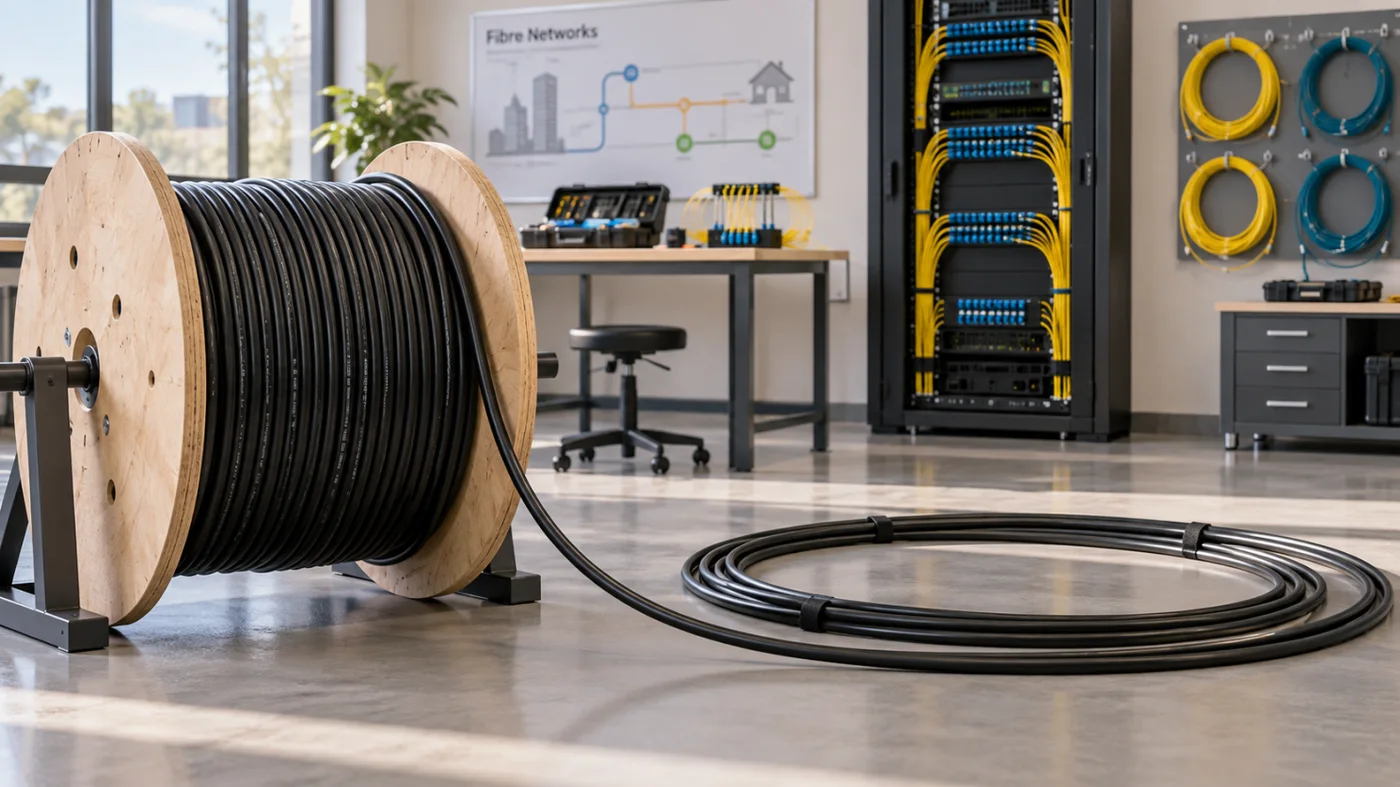
Start with the cable identity
Two cables can look similar while having different constructions and installation requirements. Confirm the manufacturer, product code, fibre count and intended installation environment. Match the delivered reel with the project specification before planning the work around it.
Obtain the current datasheet and installation instructions. Keep them available to the supervisor and crew in a form they can consult on site. If information is missing or conflicting, resolve it with the appropriate supplier or manufacturer before work proceeds.
Record which document revision you used. A screenshot shared months earlier may not identify the exact product or its complete limitations. The objective is to connect the physical reel, approved specification and handling plan without relying on memory.
Treat bend radius as a condition-specific limit
Bend radius describes the curvature a cable must be allowed to maintain. The relevant limit can differ while the cable is being installed and after it is in its final position. Confirm how the manufacturer expresses those conditions for the particular cable.
The Fiber Optic Association's installation guidance stresses the importance of manufacturer specifications. It discusses bend radius, pulling tension and handling precautions, but general examples should not replace the limits for the actual cable on your site.
Do not turn a familiar diameter multiplier into a universal rule. Write the applicable value into the method plan with its source and condition of use. Then check the physical route and equipment against that requirement rather than assuming every corner provides enough space.
Survey the whole route, including the final approach
Walk or otherwise assess the approved route before installation. Look at entry points, changes in direction, vertical sections, trays, ducts and the approach to the termination location. The last few metres can be as important as the longest straight section.
Check whether the available route matches the current drawing. Construction changes, other services and access restrictions can alter the practical installation. Record the discrepancy and obtain the required review instead of making an undocumented diversion during the pull.
Include the work area needed for safe handling. The crew needs room to manage the reel, guide the cable and communicate. A route may be geometrically possible while the planned working arrangement remains impractical or unsafe.
Plan reel placement and cable payout
Agree where the reel will be positioned and how the cable will pay out in accordance with its instructions. The aim is controlled handling without introducing avoidable twist, sharp bends or damage. Use equipment suitable for the reel and the approved method.
Inspect the delivered reel and visible cable condition under the project's receiving process. Record and escalate damage or uncertainty before installation. Keep identification and delivery information available so a concern can be traced to the correct item.
Protect the work area from unrelated movement and other hazards identified in the site assessment. Cable handling should not depend on people stepping around an unplanned loop in a busy passage. Coordinate the installation with the people responsible for the surrounding work.

Understand pulling limits before choosing equipment
Confirm the maximum permitted pulling load and the approved attachment method for the actual cable. The method needs to transfer force through the intended elements of the cable construction. Do not improvise an attachment because it appears secure from the outside.
The responsible installation planner should consider the route and equipment together. Changes of direction and the physical arrangement can affect the pull. Ask how the chosen method will stay within the specified limits and how the crew will recognise a problem.
This article deliberately provides no universal pulling-force number. A value without the cable identity and installation conditions could be misleading. If the project requires calculations or specialist assessment, have qualified personnel complete and approve them.
Give the crew a clear communication plan
Define who leads the operation, where other team members are positioned and how they communicate. Agree a stop signal that everyone understands. When communication is uncertain, the safe response should be clear before the cable starts moving.
Brief the crew on the route, sensitive locations, limits and responsibilities. Confirm that each person understands the role rather than assuming attendance at a briefing proves understanding. Changes to the planned arrangement should trigger an appropriate review.
A useful briefing is specific to the work. General reminders to be careful do not explain who watches a difficult corner or what to do if the cable catches. Turn known concerns into observable checks and named responsibilities.
Protect cable from crushing and unsuitable restraint
Think beyond bending and pulling. Review where the cable may contact edges, be trapped under other items or be compressed by restraints. Select supports and securing methods consistent with the cable instructions and the project's installation standard.
Do not tighten ties simply to make a tray look neat. A visually tidy arrangement is not proof that the cable is properly supported. Discuss the appropriate restraint method and spacing with the responsible installer and use the specified products.
Keep other trades informed about the cable route. A completed installation can be damaged later by access work, storage or modifications nearby. Identification and a clear handover help others understand what must be protected.
Manage slack as a designed part of the route
Service slack can support future maintenance, but it still needs a suitable location and arrangement. Agree how much is required, where it will be stored and how the relevant bend limits will be maintained. Do not leave excess cable as an unplanned bundle.
Check that the chosen arrangement remains accessible and does not obstruct other equipment. The maintenance team should be able to identify the cable and understand why the slack is there. A photograph and location reference can support the record.
Follow manufacturer and site guidance for any temporary cable layout during installation. General descriptions of coiling or figure-eight methods are not a substitute for a plan that suits the actual cable, work area and trained crew.
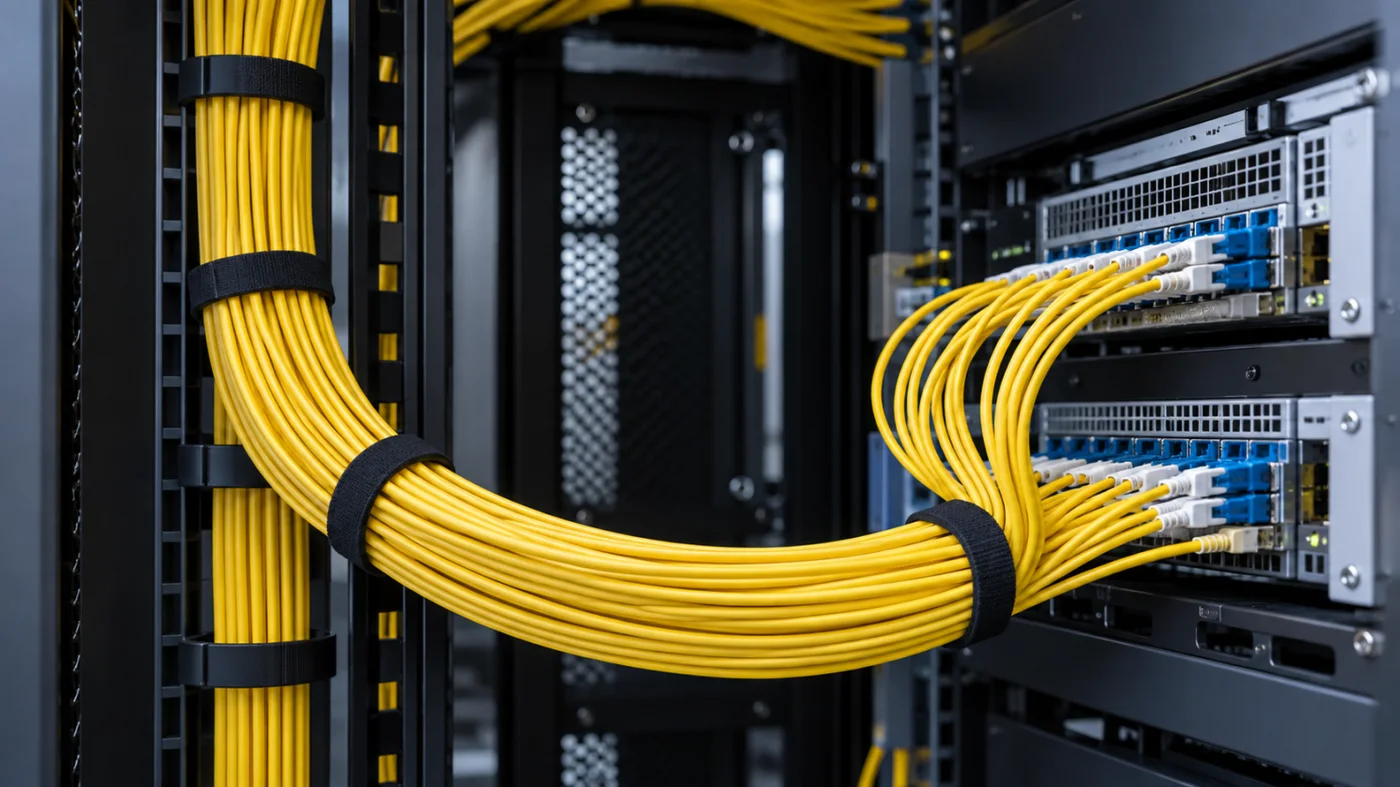
Illustrative case: a route that changes at the cabinet
Imagine a fictional contractor installing a fibre cable through a building. Most of the planned route is straightforward, but a late cabinet-position change creates a tighter final approach. The crew notices the difference during the pre-installation survey.
Instead of forcing the cable through the new turn, the supervisor refers the arrangement for review. The approved plan is updated, the team confirms the cable limits and the revised route is included in the installation record before work continues.
This scenario is illustrative, not a Jekath customer case or a measured network-performance claim. Its lesson is that checking the complete route can reveal a problem before it becomes concealed behind finished work. Good handling is a planning discipline as well as a technician's skill.
A useful field principle: Know the cable's limits before asking the cable to follow the route.
Record changes while the installation is fresh
Update the route record when an approved change occurs. Include the cable identity, relevant locations and any exceptions that need follow-up. A drawing marked from memory much later is less reliable than a record made during the work.
Keep photographs focused and labelled, following site rules. Show the location and context needed by the next team rather than collecting unrecognisable close-ups. Do not include private or security-sensitive site information in public project material without authorisation.
Record incidents or suspected damage honestly. A concern is easier to investigate when the circumstances and location are known. Hiding it because the cable looks acceptable prevents the responsible team from deciding what assessment is needed.
Coordinate installation records with acceptance testing
The project should define its acceptance tests and documentation requirements. Cable handling records and test results serve related but different purposes. One explains what was installed and how; the other supplies the agreed measurements under stated test conditions.
Do not use one passing result to dismiss a known departure from the approved installation method. Refer the issue to the responsible engineer or project authority. They should decide whether further inspection, testing or corrective action is required.
At handover, make the information usable. Identify the cable and endpoints consistently across drawings, labels and reports. The maintenance team should not have to guess which test file belongs to which route.
Pre-installation planning checklist
- Confirm the delivered cable matches the approved product.
- Obtain current manufacturer installation instructions.
- Record applicable bend and pulling limits with their conditions.
- Survey the complete route and final approach.
- Agree reel position, handling equipment and attachment method.
- Review supports, edges, restraints and work-area risks.
- Assign crew positions, communication and stop arrangements.
- Plan service slack and identification.
- Define records, approved-change handling and acceptance checks.
Frequently asked questions
Can every fibre cable use the same bend-radius rule?
No. Use the exact cable manufacturer's specification, including any distinction between installation and final installed conditions. General rules are not product approval.
Does bend-insensitive fibre remove the need for careful handling?
No. The complete cable still has mechanical and installation limits. Confirm the requirements for that product rather than interpreting a fibre description as permission to ignore them.
Is cable handling only the installer's concern?
No. Procurement must provide the right product information, designers must allow a suitable route and the site must support the approved working method. Clear interfaces help the installer do the work correctly.
Bring the route into your supplier discussion
When contacting Jekath Fibertronics, share the cable requirement, installation environment and relevant project questions. Confirm the current products and support available, and obtain manufacturer documentation for the chosen cable. A clear technical brief supports better decisions before the team arrives on site.
Reference: Fiber Optic Association: fibre-optic cable installation. Follow the actual manufacturer's instructions, approved method statement and applicable site requirements.